Your AC kicks on, hums for about three minutes, then clicks off. Ten minutes later, it does it all over again. The house never really gets cool, and you can hear the system start up every time you sit down.
That’s not normal, and it’s not just annoying. Every time your AC starts, it pulls a big jolt of power and puts stress on its parts. A system that starts and stops all day wears out faster and costs more to run.
If you’re dealing with AC short cycling Georgetown TX summers make hard to ignore, you’re not alone. When highs hit the upper 90s and beyond, an AC that can’t finish a cycle struggles to keep up. This guide covers what’s going on, what you can check on your own and when it’s time to call a pro.
Short cycling means your AC turns on, runs for only a few minutes and shuts off before it has done its job. The cause is usually a thermostat problem, blocked airflow, a unit that’s the wrong size, or an electrical or mechanical fault. Some of these are easy fixes. Others need a licensed technician.
Short Cycling Isn’t the Same as Running Nonstop
It helps to know the difference, because the two problems sound alike but act very differently.
- Running nonstop: The AC never shuts off, but your home still feels warm.
- Short cycling: The AC shuts off too soon, over and over, and starts again right away.
In the first case, the system can’t keep up. In the second, something is telling it to stop before it’s finished. That “something” is what you want to find.
What Does a Normal Cycle Look Like?
On a typical day, a healthy AC runs for a good stretch, often 10 to 20 minutes, then rests. On a very hot Texas afternoon, it may run even longer. That’s fine.
A short cycle usually lasts only a few minutes. If your AC keeps turning off in under five minutes or so, and it’s doing this over and over, pay attention.
1. Thermostat Problems
The thermostat is the brain of your system. If it’s confused, your AC will be too.
Common thermostat causes:
- A bad location. If it’s in direct sunlight, near a kitchen or close to a supply vent, it may read the wrong temperature and shut the system off early.
- Dead or weak batteries. Low power can cause odd behavior.
- Loose wiring. A loose wire can cut the signal on and off.
- Wrong settings. It sounds silly, but check the fan setting and the temperature range.
- An old thermostat. Worn parts can give false readings.
What you can do: Replace the batteries, make sure the thermostat is clean and see if sunlight is hitting it. If the problem keeps happening, a tech can test it.
2. Airflow Is Blocked
Your AC needs air to move freely across its coils. If the air can’t flow, parts get too hot or too cold, and safety controls shut the system down.
Here’s what often blocks airflow:
- A dirty air filter. This is the number one cause. Central Texas has dust, pollen and cedar season, and filters clog fast.
- Closed or blocked vents. Rugs, furniture and shut vents all choke the system.
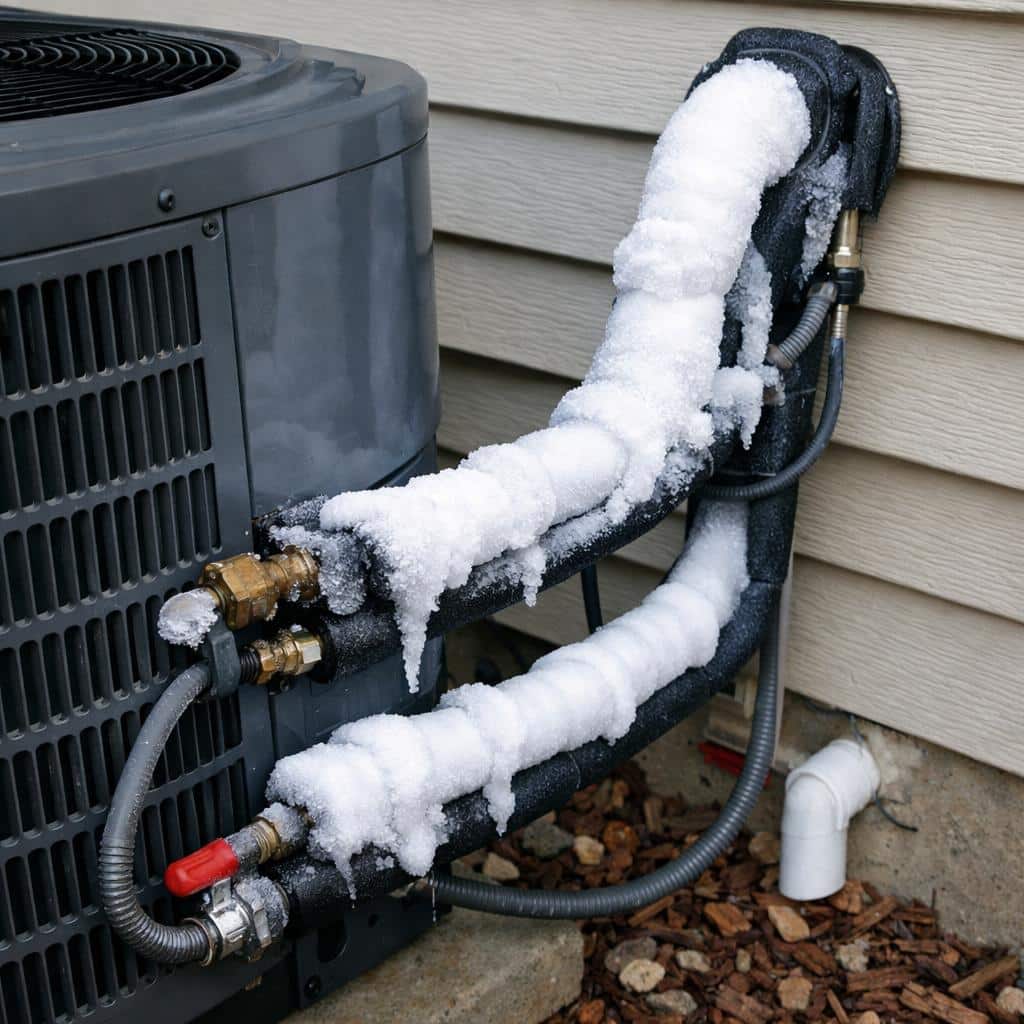
- A frozen evaporator coil. Ice builds up when airflow is poor, and then the system shuts down.
- A dirty outdoor unit. Grass clippings, cottonwood fluff, dirt and leaves can cover the coil and trap heat.
- Leaky or crushed ducts. Your leaky ducts make your hvac work harder, as the air escapes before it reaches your rooms.
What you can do: Check your filter once a month in summer. Open your vents. Gently rinse off the outdoor unit with a hose, after you turn the power off, and keep plants about two feet back.
3. The System Is the Wrong Size

This one surprises people. A bigger AC isn’t always better.
An oversized unit cools the air too fast. It reaches your set temperature in a few minutes, then shuts off. A little later it starts again. It never runs long enough to pull out humidity, either, so your home can feel cool but clammy.
A unit that’s too small has the opposite problem. It runs and runs and can’t catch up.
What you can do: There’s no DIY fix here. If your system was never sized correctly, or if you added on to your home, a pro can run the right numbers. That’s called a load calculation.
4. Low Refrigerant or a Leak
Refrigerant isn’t used up like gas in a car. If the level is low, there’s a leak somewhere. Low refrigerant can make the coil freeze, and it can also make the compressor run hot. Both can cause the system to shut down early.
What you can do: Nothing on your own. Handling refrigerant takes a license and special tools. Don’t let anyone just “top it off” without finding the leak.
5. Electrical Problems
Your AC depends on a few small parts to start and keep running. When one fails, the system may start, stall and quit.
Common electrical culprits:
- A weak or failing capacitor. It gives the motors a boost to start. When it wears out, the unit may struggle and cut out.
- A worn contactor. This is a switch that sends power to the outdoor unit. If it sticks or burns out, the AC may turn off.
- A bad control board. It tells all the parts when to run.
- A tripping breaker. If the breaker keeps flipping, something is drawing too much power.
What you can do: Don’t open the panel. These parts can hold a charge even after the power is off. This is a job for a licensed tech.
6. Mechanical Problems
Sometimes the trouble is in the moving parts.
- A compressor that overheats. The compressor is the heart of your AC. If it gets too hot, a safety switch turns the unit off to protect it.
- A failing fan motor. If the outdoor or indoor fan isn’t moving air well, the system can overheat or freeze.
- A clogged drain line. Texas humidity makes a lot of water. If the drain backs up, a float switch can shut the system down to prevent a leak.
These are signs of a bigger problem, and the longer they go on, the more costly they can get.
Quick Checklist Before You Call
You can try these safe steps first:
- Replace the thermostat batteries
- Check and change the air filter
- Make sure all vents are open
- Look at the outdoor unit for debris
- Check for ice on the indoor or outdoor lines
- Make sure the breaker hasn’t tripped
If none of that helps, stop there. Don’t keep restarting the system over and over.
Signs You Need a Pro to Take a Look
Some problems need a trained tech. Call a licensed HVAC service Belton Tx, if you notice:
- Your AC starts and stops again and again, even after the easy fixes
- Ice on the coils or refrigerant lines
- Clicking, buzzing or humming sounds
- A burning smell
- Water around the indoor unit
- Breakers that trip
- Higher electric bills with no change in how you use the AC
- Rooms that feel hot or sticky even though the system keeps running
Texas heat is rough on an AC, and short cycling usually means a part is under stress. Getting it checked early often costs far less than waiting until something breaks completely. For AC short cycling Georgetown TX homeowners can count on a licensed tech to find the true cause, not just guess.
What Happens If You Ignore It?
Short cycling doesn’t fix itself. Here’s what it can lead to:
- Higher bills. Starting up uses the most power.
- Worn-out parts. The compressor and fan motor take the hit.
- Poor comfort. Hot rooms and sticky air.
- A costly repair or early replacement. Small problems often turn into big ones.
Quick Questions
Is short cycling dangerous?
It’s not usually an immediate danger, but it can lead to electrical or mechanical failures if you ignore it. If you smell burning or see smoke, turn off the system and call a pro right away.
Can a dirty filter really cause this?
Yes. A clogged filter blocks airflow, which can make the coil freeze or the unit overheat. It’s the easiest thing to check, so start there.
Can a brand new AC short cycle?
It can. The most common reasons are an oversized unit, a thermostat in the wrong place, or an install problem. If your new system does this, call the company that installed it.
How many times an hour should my AC turn on?
It depends on the weather and your home. On a mild day, two or three cycles an hour is common. If it’s starting much more often than that and shutting off quickly, it’s worth getting checked.
Wrapping it Up
An AC that keeps turning on and off is trying to tell you something. The cause could be a simple fix, like a dirty filter, or a bigger issue, like a failing part or a unit that’s the wrong size. Start with the easy checks, then call a licensed tech if the problem sticks around.
Don’t wait for the hottest week of the year. If you’re facing AC short cycling Georgetown TX heat can make worse, contact Rohde Air Conditioning & Heating. Our licensed techs service Georgetown and Central Texas homes, and will find out why your system won’t stay on.


