
You set the thermostat to 72. The bedroom feels like a freezer. The living room feels stuffy. The hallway is somewhere in between. You bump the temperature up and down all day, but nothing really fixes it.
That's not a thermostat problem. It's an airflow problem. And the fix isn't guessing — it's a proper air balancing test.
Air balancing is the process of measuring and adjusting how much air reaches each room, so your whole house stays at the temperature you actually set. A technician doesn't just tweak a vent and hope for the best. They measure, adjust, and verify, room by room. Here's exactly what happens when a pro does it and what the results actually mean for your comfort and your power bill.
Key Takeaways
- Air balancing is a measured, room-by-room process-; not a guess or a quick adjustment
- The technician starts with a full system check before touching a single vent
- Airflow is measured in CFM (cubic feet per minute) at every register
- Dampers inside the ductwork are the main tool used to redirect air
- The goal is even temperatures across every room, not just the ones near the unit
- A proper test ends with a verification pass and, ideally, a written report
- In Temple TX, air balancing is often the fix for homes with hot and cold spots that no thermostat change will solve
Why Does a House End Up With Uneven Airflow in the First Place?
Airflow goes wrong for a few ordinary reasons.
Ductwork might be undersized for the system, or the layout might favour the rooms closest to the air handler. Dampers, the adjustable plates inside your ducts that control how much air goes where; might be set wrong, or stuck in one position. Filters might be clogged, cutting down airflow before it even reaches the rooms. And over time, small duct leaks or crushed sections quietly starve the rooms at the end of the run.
None of that is unusual. It just means the system needs to be measured and corrected. That's what air balancing does.
What's the First Thing a Technician Does on an Air Balancing Call?
The first step isn't balancing. It's checking that the system is actually in a fit state to be balanced.
An air conditioner installation temple service will assess your unit itself; the furnace, the air conditioner, the blower, and the filter. They'll look at the ductwork and vents for obvious problems: damaged ducts, blocked runs, or sections that are clearly the wrong size for the airflow they're meant to carry.
This part matters. You can't balance a system that's fighting a dirty filter or a crushed duct. Fixing those issues first is what makes the measurements meaningful. The balancing itself comes after the system is running clean.
How Does the Technician Actually Measure Airflow?
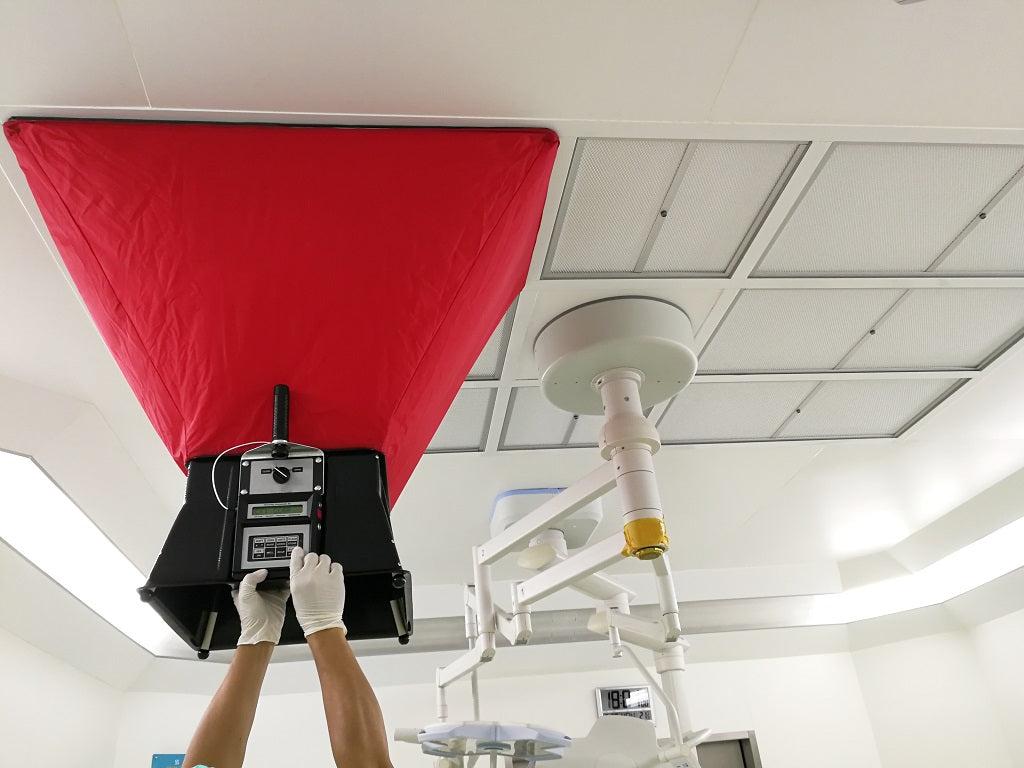

This is where the process stops being guesswork.
The technician uses an anemometer; a handheld meter that measures air velocity, to take readings at each supply register. That gives them the airflow in cubic feet per minute, or CFM.
At the same time, they measure static pressure in the ducts using a manometer. Static pressure is the resistance the air is fighting as it moves through the system. High static pressure means the blower is pushing against a restriction; undersized ducts, a dirty coil, or a clogged filter. Low airflow at a vent might not be a damper problem at all; it might be a pressure problem upstream.
They'll also check temperatures at the registers and around each room, to see how evenly the conditioned air is actually landing.
The picture that emerges from those three readings; CFM, static pressure, and temperature, tells the technician exactly where the system is out of whack and why.
What Does the Technician Adjust to Fix the Balance?
The main tool is the damper.
Dampers sit inside the ductwork and control how much air flows down each branch. If the bedroom is getting too much air and the living room isn't getting enough, the technician can close the bedroom damper slightly and open the living room one. That redirects air without changing the total output of the system.
Registers and vents can also be adjusted, though the real work happens inside the ducts. If the assessment turned up damaged or undersized duct sections, those might need repair or modification before the balancing adjustments can hold.
The point is that the technician isn't just opening and closing vents randomly. Every adjustment follows a measurement. They're steering a specific amount of air into a specific room to hit a target, then re-measuring to confirm it worked.
How Long Does an Air Balancing Test Take?
Plan for most of a day for a medium to large home.
That's not because the measuring is slow. It's because balancing is iterative. Adjust a damper, re-measure, adjust another, re-measure again. The technician is working toward a set of target airflow figures for every room, and the system only settles into balance once all the adjustments work together.
If repairs are needed; a damaged duct section, a filter replacement, a blower adjustment, that adds time on top. A simple, single-system home might be quicker. A two-storey house with zoning and multiple air handlers takes longer.
How Does the Technician Know the Job Is Actually Done?
They verify it.
After the adjustments, the technician goes back and re-measures airflow, pressure, and temperature at the registers. If the numbers now match the targets across every room, the system is balanced. If a room is still short, the adjustment process continues until it isn't.
A proper job ends with documentation. The technician should provide a report listing what was measured, what was adjusted, and what the final airflow and temperature readings are for each room. That report is your proof the work was done, and it's a useful baseline if you ever need to troubleshoot the system again.
What Signs Tell You Your Temple TX Home Needs Air Balancing?
You don't need to guess. The symptoms are fairly clear.
If one or two rooms are always warmer or cooler than the rest, that's the classic sign. If some vents barely push any air while others blast, that's another. If your energy bills have crept up without any change in how you use the system, uneven airflow could be forcing the blower to work harder than it should.
In Temple, where summers are long and the system runs hard, those symptoms tend to get worse before they get better. Air balancing is the fix that addresses the cause rather than the thermostat reading. A local air balancing Temple TX service will measure the actual airflow and tell you what's out of balance, rather than just adjusting a vent and hoping.
FAQs
Is air balancing the same as duct cleaning?
No. Duct cleaning removes debris from inside the ducts. Air balancing measures and adjusts how much air flows to each room. Cleaning can improve airflow if the ducts are heavily blocked, but it doesn't calibrate the distribution. They're different jobs that sometimes get done together.
Can I balance my own airflow by adjusting the vents?
You can adjust the registers on the wall, but that only changes the flow at the face of the vent. The real balancing happens at the dampers inside the ductwork, and you need airflow measurements to know which dampers to move and by how much. Without the measurements, you're guessing.
Will air balancing fix a room that's always too hot?
If the cause is uneven airflow, yes. If the room is too hot because of poor insulation, a window issue, or a duct that's disconnected or crushed, balancing alone won't solve it. The test will usually reveal which problem you're dealing with
How often should air balancing be redone?
It's not a routine annual service. It's typically done after a new system installation, after major ductwork changes, or when comfort problems appear. If nothing has changed in the system and the house, the balance shouldn't drift much.
Does air balancing really lower energy bills?
It can. When airflow is uneven, the blower works against higher static pressure and the system runs longer to satisfy the thermostat. Balancing reduces that strain, which means the equipment runs more efficiently. The savings depend on how out of balance the system was to begin with.
The Bottom Line From Us
Air balancing isn't a mystery. It's a measured process: check the system, measure the airflow, adjust the dampers, verify the results. The technician is matching the air your system produces to the air each room actually needs.
If your house has hot and cold spots that no thermostat setting will fix, the problem is likely airflow distribution. A proper test will tell you exactly where it's going wrong.
We're Rohde Air Conditioning & Heating, and we handle air balancing across Temple, Killeen, Belton, Harker Heights, and Waco. If you're tired of rooms that never feel right, give us a call. We'll measure what's happening and tell you straight what it'll take to balance it.


