
You set your thermostat to 72 degrees, and your AC runs and runs. But some rooms feel like an icebox while others stay sticky and warm. You're paying more every month, and your system never seems to shut off.
Here's the short answer: leaky ductwork could be the culprit. Your HVAC system might be working perfectly fine but the air it's conditioning is escaping through holes, gaps, and loose connections in your ductwork before it ever reaches your living space. The result? Wasted energy, uneven comfort, and a system that's running overtime for nothing.
What you'll learn here:
- What leaky ductwork actually looks like and how to spot it
- Why leaking ducts force your HVAC to work harder than it should
- The real cost of duct leaks on your energy bills
- How professional duct sealing can fix the problem
- When to call a professional for HVAC service in Belton, TX
It's Not Your HVAC - It Could Be Your Ductwork
Before you blame your air conditioner or furnace for running nonstop, here's something to consider: your system might be working perfectly fine. The real problem could be hiding in your walls, attic, or crawl space - your ductwork.
Think of your ducts like a network of highways delivering air to every room. When those highways have potholes, detours, or broken sections, the air never reaches its destination. Instead, it escapes into places it doesn't belong; your attic, your walls, or anywhere except your living room.
The U.S. Department of Energy puts it bluntly: duct leaks can add hundreds of dollars a year to your heating and cooling bills. Some studies show that up to 25% of a home's energy loss comes straight from leaky ducts. That's a lot of money blowing away through gaps you can't even see.
How do I know if my ducts are leaking?
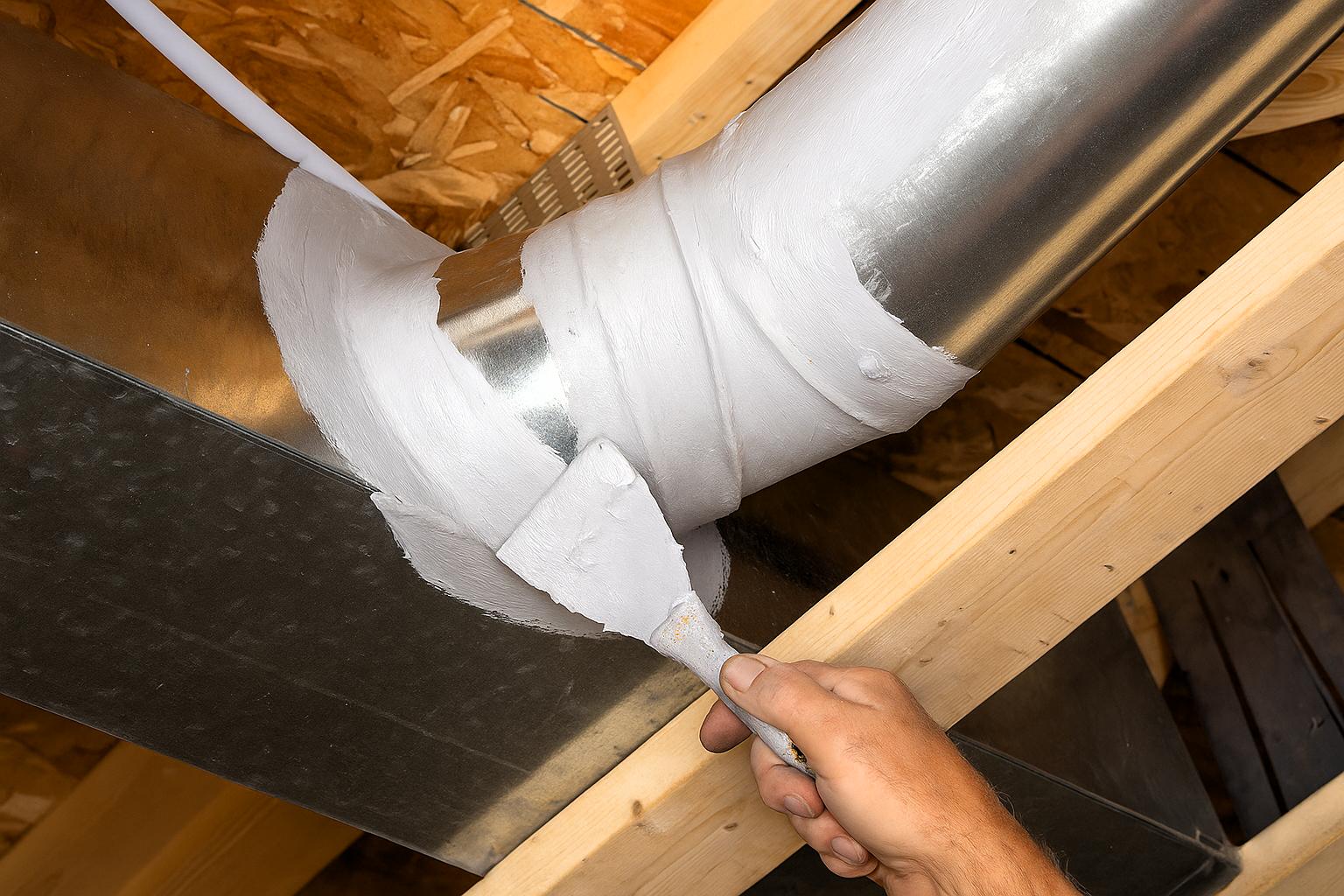

Leaky ducts don't always announce themselves with a hissing sound or visible holes. Often, the signs are more subtle. Here's what to look for:
| Sign | What it means |
| Uneven temperatures | Some rooms are too hot, others too cold – even when the thermostat is set correctly |
| High energy bills | Your system uses more energy to compensate for lost air |
| Weak airflow | Air feels weak coming out of vents, especially in rooms far from the system |
| System runs constantly | Your HVAC cycles frequently or never shuts off |
| Excessive dust | Dust builds up quickly no matter how often you clean |
| Hissing sounds | You hear air escaping from your ductwork |
If you're noticing any of these, there's a good chance your ductwork is leaking and your HVAC is working harder than it needs to.
Why do leaky ducts make my HVAC work harder?
Your HVAC system is designed to deliver a certain amount of conditioned air to your home. The air that leaks from ducts escapes. Your system must be able to keep running for longer and harder to give you back what you've dropped.
Here's what happens:
You have longer cycles in your system. Your system doesn't stop when it reaches the desired temperature, it continues to operate because the conditioned air is escaping before it can perform its duty. This will cause wear and tear on your equipment.
Your energy bills go up. Your system consumes more energy the longer it's operating. Research indicates that leaky ducts can increase HVAC energy usage by approximately 18%. That's real money back in your pocket.
Your comfort suffers. Air that leaks out never reaches your living space. So some rooms get too little conditioned air, while others get too much. You end up playing thermostat gymnastics trying to stay comfortable.
Your equipment wears out faster. All that extra runtime puts strain on your system. Components wear out sooner, and you end up facing costly repairs or early replacement.
How much energy is wasted through leaky ducts?
More than one would imagine. Research shows that duct leakage may be responsible for up to 25% of the total house energy loss. According to the U.S. Department of Energy, leaked heated air was responsible for hundreds of dollars in heating and cooling expenses each year.
According to some studies, as many as 75% of duct systems have leaks in the range of 10-25%, and some even lose up to 40% of their heating/cooling energy. Due to duct leaks and other losses, the typical HVAC system runs at only 60-70% efficiency.
Fortunately, those leaks can be sealed. Studies have shown that duct sealing can reduce leakage flow by about 40%, translating into a reduction in energy consumption of about 10%. This is quite a saving on your monthly bills.
Can I fix leaky ducts myself?

You can tackle small, visible leaks yourself. Here's what works:
Use duct mastic. This is a water-based sealant that you paint over duct joints and seams. It permanently seals air leaks and improves HVAC efficiency. Unlike duct tape (which actually doesn't hold up well on ducts), mastic air duct sealant creates a lasting seal.
Use metal-backed foil tape. This is another option for sealing small gaps and connections. Make sure you're using tape specifically designed for ductwork, regular duct tape won't cut it.
Check accessible ducts. Look for disconnected sections, loose joints, and obvious gaps in areas you can easily reach like in your attic, basement, or crawl space.
But here's the catch: most ductwork is hidden behind walls, under floors, or in hard-to-reach spaces. And even if you can see some of it, you might not be able to find all the leaks. That's where professional help comes in.
A qualified HVAC service Belton Tx uses specialized tools like duct blasters and smoke tests, to find leaks you'd never spot on your own. They can seal leaks throughout your entire system, including the ones you can't see.
What does professional duct sealing look like?
When you call a professional for AC repair Belton or duct sealing, here's what they'll do:
Inspection. They'll inspect your entire duct system, looking for visible damage, disconnected sections, and signs of leakage.
Testing. Using specialized equipment, they'll measure how much air is leaking from your ducts. This tells them exactly where the problems are.
Sealing. They'll use professional-grade materials like mastic sealant or aerosol-based technologies, to seal leaks throughout your system. This isn't the same as slapping on some tape. It's a permanent fix.
Insulation. In some cases, they'll also insulate ducts in unconditioned spaces to prevent energy loss through the duct walls.
Verification. After sealing, they'll test again to confirm the leaks are fixed and your system is performing efficiently.
Is duct sealing worth the cost?
Yes. The savings on your energy bills often pay for the cost of sealing within a couple of years. And once it's done, you keep saving year after year.
Beyond the money, duct sealing also improves your comfort, no more hot and cold spots. It extends the life of your HVAC system by reducing wear and tear. And it improves your indoor air quality by keeping dust, allergens, and contaminants out of your ductwork.
Frequently asked questions
How long does a typical duct sealing job take?
For the average home, plan on about a day. The tech comes out, inspects everything, runs some tests, does the sealing work, and then tests again to make sure it's all good. Bigger houses or ones with complicated duct setups could take a bit longer.
Will sealing my ducts make my home quieter?
Yep. Those little whistling or hissing sounds you might hear when the system kicks on? That's air sneaking out through gaps. Seal those up, and your system runs quieter.
Do I need to replace my ducts or just seal them?
Usually sealing does the trick. Replacement only makes sense if your ducts are really beat up; crushed, rusted out, or falling apart. A pro can take a look and tell you which one you actually need.
Can leaky ducts affect my health?
They can, indirectly. If your ducts have leaks in the attic or crawl space, they can suck in dust, mold spores, and insulation particles and blow them right into your living space. Sealing those leaks keeps that stuff out of the air you breathe.
How often should I have my ducts inspected?
Every 3 to 5 years is a good rule. But if you've done any remodeling, noticed your comfort levels feeling off, or had critters in your attic, it's worth getting them checked sooner.
Massage from Rohde Heating & Air Conditioning
Look, we know how annoying it is. Your system runs constantly, your home still doesn't feel comfortable, and your bills keep going up. You're not sure if it's the equipment or something else, and you don't know who to trust to figure it out.
At Rohde Heating & Air Conditioning, we've been working with homeowners all over Central Texas for years. We've seen plenty of leaky ductwork, we know where to look for hidden problems, and we know how to fix them the right way, using materials that actually last.
We serve folks in Belton, Temple, Killeen, Waco, and all the surrounding towns. Whether you need someone to check your ducts, give your system a tune-up, or track down a comfort issue you can't solve, we'll come out, take a look, and give you honest answers.
Tired of paying to heat and cool your attic instead of your home? Give us a shout. We'll inspect your ductwork, show you what's going on, and give you a straight plan to fix it.


